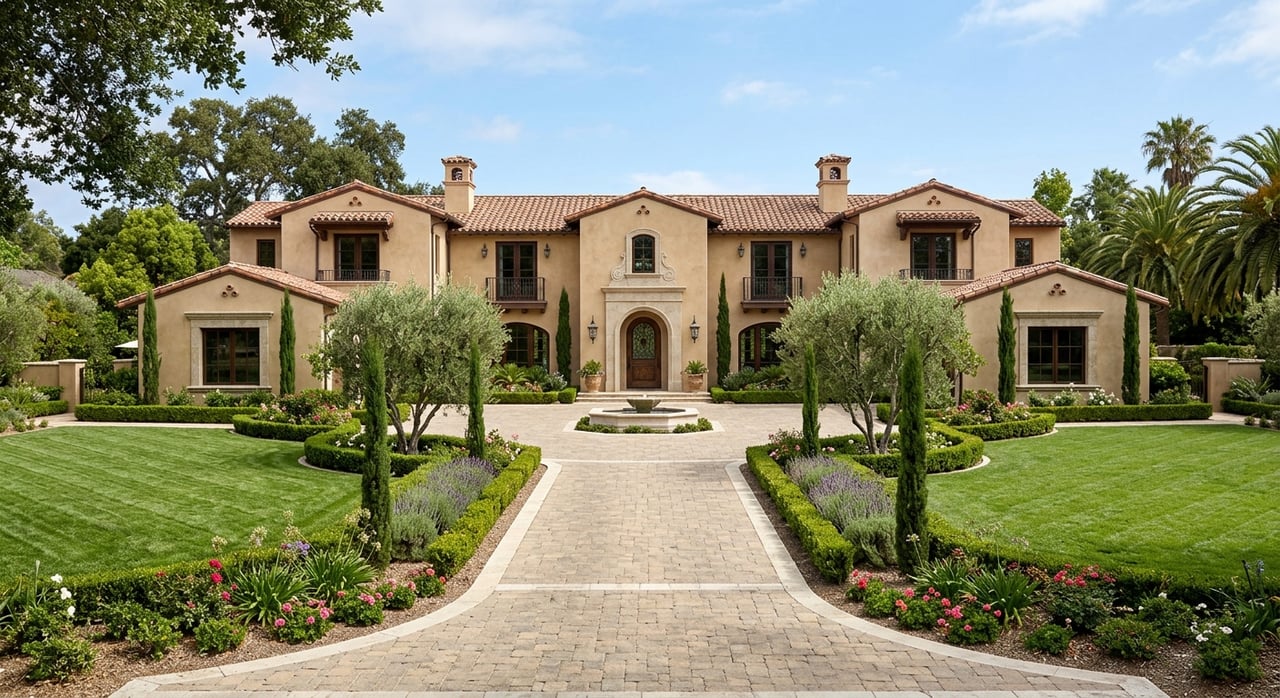
Drive through Bel-Air looking for a place to grab a coffee and you will not find one. No corner market, no strip of restaurants, no block where you can park and walk into three different storefronts. That is not an oversight. When Alphonzo Bell filed the first tract for Bel-Air in 1923, it consisted of 128 lots, all of them meant for houses. A second tract followed in 1925, expanding the community, but the pattern held: this was land platted for residences from the start, not for the kind of commercial spine that anchors most Los Angeles neighborhoods.
Which raises the actual question a longtime resident might have, one that has nothing to do with home values and everything to do with a Tuesday morning: if there was never supposed to be a coffee shop here, where does the neighborhood actually go?
For most of Bel-Air's history, the answer has been a short list. The Bel-Air Country Club, incorporated in 1924. A private homeowners association founded in 1942. And a building on Stone Canyon Road that started in 1927 as Bell's own estate-planning office before it opened to the public as the Hotel Bel-Air in 1946. Three institutions, none of them retail, all of them doing double duty as the places where neighborhood life actually happens. That list barely changes decade to decade. Which is what makes the last two years at the hotel worth paying attention to.
The Gap the Hotel Finally Noticed
In August 2024, after years of operating as the Wolfgang Puck-run restaurant that most Angelenos associated with the property, Hotel Bel-Air opened two new spaces: The Living Room and The Patisserie. Culinary director Joe Garcia, who came out of The French Laundry and drew notice at Manzke, oversaw the shift, working alongside executive pastry chef Christophe Rull.
The Patisserie is the one that matters for the coffee question. It occupies what used to be the hotel's gift shop, with seating that spills into the property's gardens near the Swan Lake bridge. It opens daily at 7 a.m. and closes at noon, and everything in the case is made on-site: croissants, cookies, muffins, tarts, cream puffs, pound cakes, cheesecakes, and a sourdough built from a ten-year-old mother starter that runs $25 a loaf. There is a gelato trolley for warmer afternoons.
What makes this more than a hotel amenity update is what the hotel's own general manager, Christoph Moje, said when it opened. He put the problem plainly:
"Our local guests, who can make up more than half of our bar business at night, wondered why they have to go so far away, to Brentwood or Beverly Hills, to get a coffee and a pastry. They wanted to be able to enjoy the garden and read a newspaper."
That is a rare admission from a five-star hotel: the neighborhood around it didn't have a place to sit down with a coffee, so the hotel became one. Two years in, the Patisserie functions less like a hotel outlet and more like the closest thing Bel-Air has to a neighborhood café, precisely because nothing else fills that role.
The Living Room, open Wednesday through Sunday from 2 to 9 p.m., is the other half of the shift. It runs a $140 afternoon tea service with champagne and, in the evenings, a caviar program alongside what the hotel calls the coldest martini in town. It is not a casual stop the way the Patisserie is, but it occupies the same logic: a private property absorbing the social function a commercial district would normally provide.
The Rest of the Rotation
The hotel is not the only institution carrying that weight. The Bel-Air Association, the homeowners group founded in 1942, runs the closest thing the neighborhood has to a civic calendar, and this summer's agenda gives a clear read on what late summer actually looks like here. This month alone the Association hosted a members-only Taco Tuesday, is midway through an ongoing beautification project at St. Pierre Island, one of the landscaped medians along a street named for Mrs. Bell's fondness for Italy, and is running its annual reminder that brush clearance season has arrived, the yearly push to get residents to clear dry vegetation before fall.
None of these are open to the general public. That is the point. In a neighborhood without storefronts, the Association's calendar functions as the substitute for one, and it has for over eighty years.
A View You Can't Actually Walk Into
The outdoor equivalent of this pattern sits on Mulholland Drive. The Stone Canyon Overlook is a short, fragrant, ADA-accessible trail maintained by the Mountains Recreation and Conservation Authority, with views across the Santa Monica Mountains toward the Palos Verdes Peninsula and, on a clear day, Catalina Island. It also looks directly down on the Stone Canyon Reservoir, the LADWP-owned lake that supplies emergency drinking water and wildfire suppression capacity for the surrounding hills.
The overlook is public. The reservoir is not. The Bel-Air Association has had to post notices reminding residents and visitors that the two sections of the reservoir, upper and lower, are strictly off-limits, after people were found hiking down the canyon walls and swimming in the lower pool. It is a small, telling detail about how this neighborhood works: you can stand at a dedicated public vista point and look at the water, but the water itself belongs to the utility, fenced and enforced. Even the scenery here comes with a boundary.
The Same Short List, With One New Name On It
Step back and the pattern is consistent across every part of daily life in Bel-Air. There is no shopping street to wander, no cluster of cafés to choose between, no public park system with a dozen entry points. There is a private country club from 1924, a homeowners association from 1942 that runs its own event calendar, a single public overlook on Mulholland with a fenced reservoir behind it, and a hotel that started as one man's estate office in 1927 before it ever served a paying guest.
For decades that list did not grow. The hotel changed chefs and menus over the years, but it never added a genuinely new kind of space, somewhere you could sit outside of a formal dining reservation. The Patisserie is the first real addition to that short list in a long time, not because a bakery is remarkable on its own, but because it fills a gap the neighborhood's own general manager named out loud: there was nowhere close to home to get a coffee.
That is the actual shape of life in a neighborhood that was built, on purpose, without a Main Street. It runs on a handful of institutions instead of a business district, and when one of those institutions quietly adds a new room, it changes more of the neighborhood's rhythm than a dozen new restaurants would somewhere else.
If you already call Bel-Air home, none of this changes how the neighborhood is zoned or what your property is worth. But if you have ever wondered why a five-star hotel spent two years building a bakery instead of another dining room, now you know: it was solving a problem the neighborhood has had since 1923.
For homeowners weighing what any of this means for their own property, or for anyone considering a move into one of Bel-Air's estates, Steve Frankel has spent more than two decades tracking how the Westside's most private neighborhoods actually function day to day, not just what they list for. Request a Confidential Home Valuation to talk through what your Bel-Air property is worth in today's market.